Demolition VS
Creating Art
After completing his graphic design education, Eibert Beugelink (Rotterdam, 1963) worked for many years as both a creative and technical graphic designer. He collaborated with renowned publishers and magazines, including Frame, contributing to projects that received international awards. Over time, he developed the desire to bring his ideas and drawings to life in three dimensions. When he realized there was no obvious person to do that for him, he decided to take matters into his own hands and began sculpting himself.
His fascination with art began at an early age. As a four-year-old growing up in Rotterdam, he was deeply impressed by The Destroyed City by Ossip Zadkine, a sculpture that sparked his lifelong interest in sculpture. After moving to Arnhem, he spent much of his youth around artists’ studios, experimenting creatively with drawing, clay, and building dioramas.
For many years, however, art took a back seat to an intensive life in martial arts. He competed, coached numerous people, traveled extensively around the world, and devoted himself fully to the fighting arts. Sculpture required a level of time and dedication that simply did not fit into that period of his life.
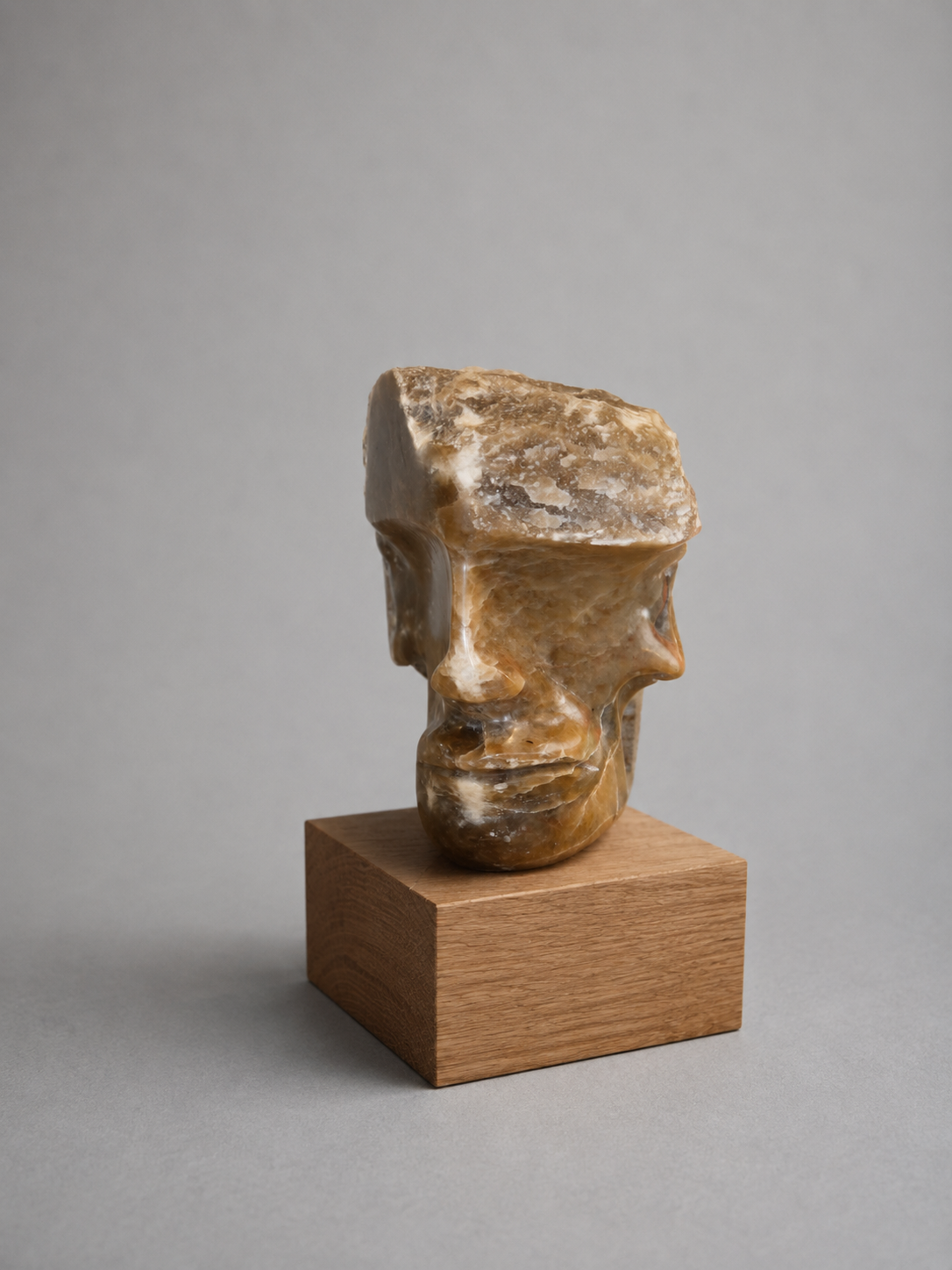
At a certain point, he consciously shifted his focus back toward art. He began working with stone and, after visiting Carrara — world-famous for its marble — he became deeply committed to marble sculpture. While he still coaches a small number of young fighters, his primary focus today is sculpting, alongside a growing interest in ceramics.
His sculptures are often inspired by his own simplified illustrations. He feels connected to figurative abstraction, while preferring not to place his work within a specific movement. Artists such as Amedeo Modigliani and Constantin Brâncușiremain important sources of inspiration.
Holler at me!
Let’s see what we can mean to each other.